
Recommendations: Industry Equipment for Academic Groups
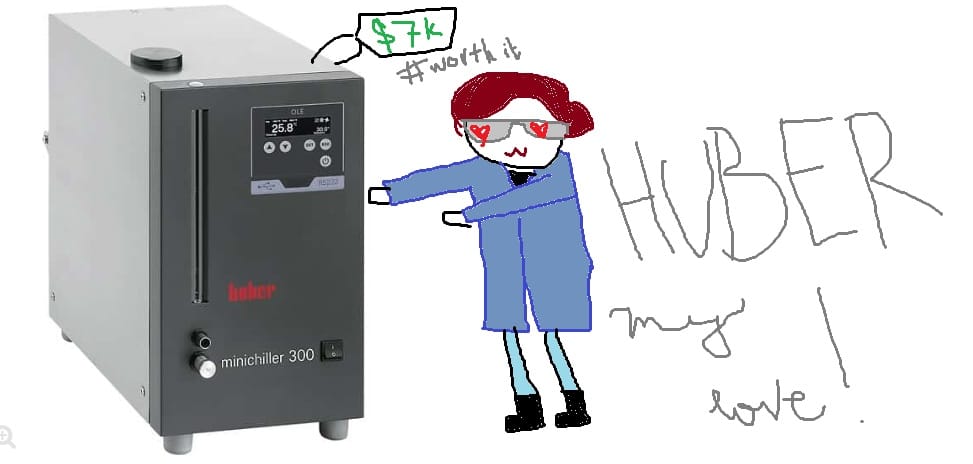
I may have been having a love affair with the convenience of my vacuum oven for the past several months while working on some impurity synthesis stuff. I thought I'd put together a list of things that I never encountered in academia but that would have been... life changing.
- Combiflash systems (ISCOs, Biotages)
- I still sometimes prefer a good hand column, but when it comes to compounds I make repeatedly or ones that I know EXACTLY how the separation goes, these are lifechanging. We did have two in my post-doc lab, but I can't imagine life without one now.
- TLC-MS
- This one was actually in my post-doc lab, and I know our discovery chemists have them but there's not one in my area (not really needed anymore). This was incredible for methodology/total synthesis work. They're a little finnicky, I don't think the tech is quite as developed as GC/LCMS, but the convenience is unparalleled.
- Vacuum ovens
- You stick your compound in and turn it on with a nitrogen purge and it's dry by the next day even if it was wet with water. I would have been a LOT less resistant to recrystallizations if this was an option in grad school.
- Chillers/jacketed temperature baths, RBFs, reactors
- The AMOUNT of LITHIATIONS I have done where this would have saved my life! And $$$ on the dry ice I had to constantly chuck in my acetone baths. Upfront cost is high, but the SAVINGS?! The CONVENIENCE?! Propylene glycol/water mixtures work just as well as proprietary cooling media, so! Get one!
- Overhead stirrers
- For scale reactions, these are incredible. We did also have one or two in academic labs, but no one ever used them because there wasn't the correct size stir shaft, etc, etc. I had 5 stir plates in my hood when I was a grad student, and if I'd had overhead stirrers, I would have had a lot more space for ACTIVITIES.
- Oxygen meters
- Again, the amount of lithiations I've done where this would have saved my life? Karl Fisher does a great job for water content, but the ability to determine how effective your sparging has been before doing a lithiation or palladium reaction is *chef's kiss*.
- Temperature probes (JKEM and others)
- Being able to monitor the internal temperature of the reactions I run is incredible, and lets me know if my baths/chillers are coming up to the temp they're supposed to. Also, being able to say "~80 °C (bath temperature)" is much less accurate than "80 °C internal". Ours hook up to heating mantles which we use sometimes for temperature control – and the temperature is determined by the internal probe. 10/10 would recommend.